
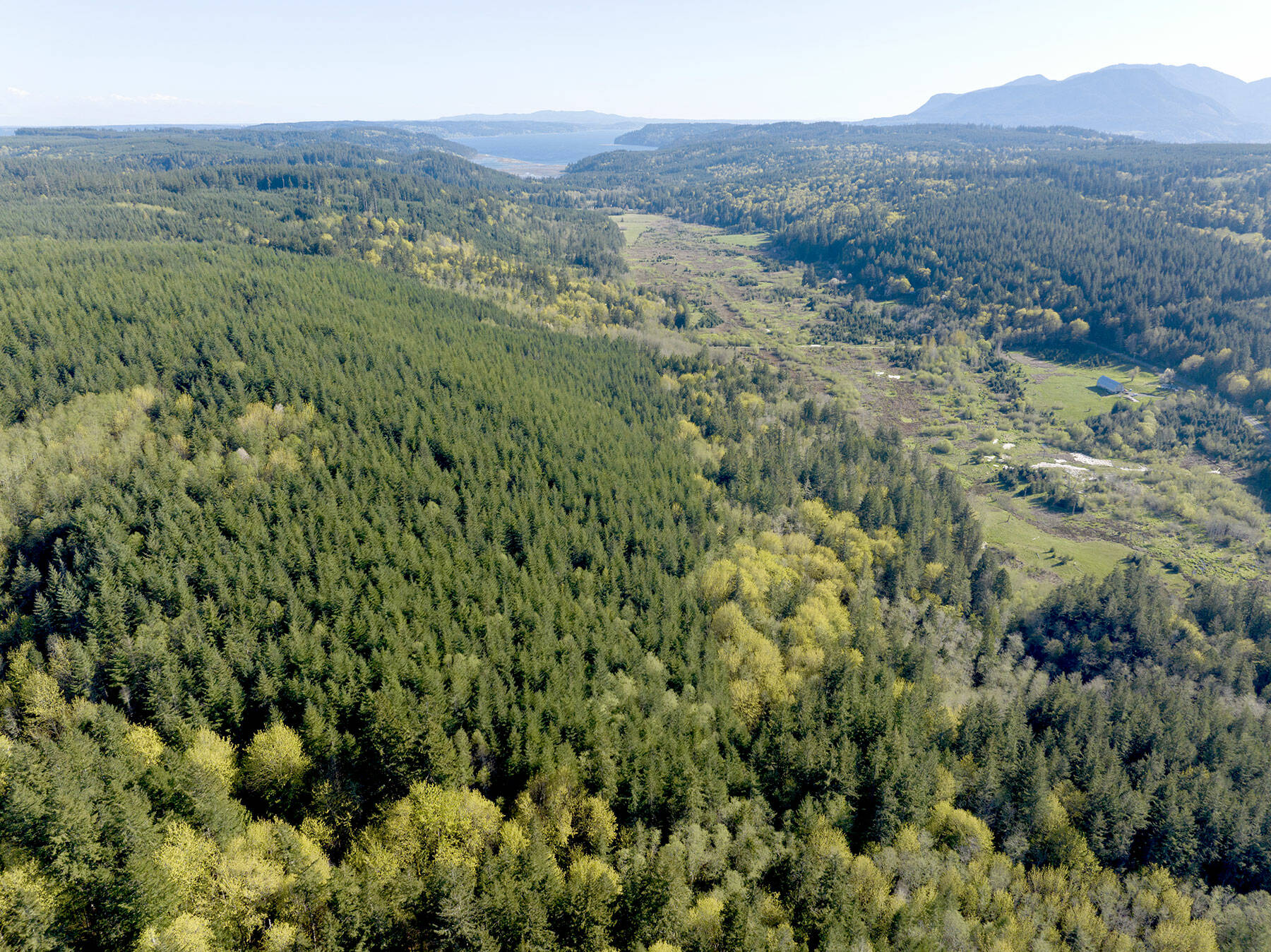
QUILCENE — The Northwest Watershed Institute has acquired 81 acres of forest and wetlands to be permanently protected and preserved in the Tarboo valley.
The land is now counted among the 500 acres the conservation organization holds as a part of its Tarboo Wildlife Preserve.
“I’m very happy to see this land now included as part of the preserve,” said Peter Bahls, executive director and biologist, in a Northwest Watershed Institute (NWI) press release. “The property has forested slopes, streams and wetlands, and its long-term conservation is critical to the overall health of Tarboo Creek and fish and wildlife in the Tarboo valley and downstream Dabob Bay.”
The added land bordered the existing preserve and fits into a larger effort to protect the Tarboo watershed. NWI has partnered with more than 40 organizations to protect 4,800 acres in the watershed since 2002, according to the press release.
The newly purchased land is not touching Tarboo Creek, but the forested slopes on the property play an important role in conserving the watershed, Bahls said.
“Forests and wetlands on the property include a diversity of habitat for iconic birds, amphibians and mammals native to the Pacific Northwest,” Bahls said. “The parcel is also now part of a larger wildlife habitat corridor for state endangered fisher and other wildlife that stretches from the headwaters of Tarboo Creek to Dabob Bay.
“When NWI first inquired about buying the property in 2024, a 2-year-old male cougar named Sewect that had been radio-collared as part of the Panthera project, traveled down the Tarboo Creek valley and then apparently bedded down in this forest for a while. I took that as a good sign.”
The steep forested slopes include tributary streams and wetlands which help maintain fish habitat and the water quality of downstream Tarboo Creek, Bahls said.
“The creek supports habitat for many at-risk native species, including federally listed steelhead salmon, coho salmon, coastal cutthroat trout and western brook lamprey,” Bahls said.
Further, the 34-year-old forest on the property is sequestering roughly the same amount of carbon that would be emitted by burning 15 tons of coal.
NWI’s initial stewardship will involve removing invasive species like English ivy and English holly. Eventually, the property is likely to see some ecological forestry, he said, with an intention of eventually managing for more diversity of species and some older trees.
NWI completed the purchase from Rayonier on June 25.
At $1,295,000, the purchase was funded by a combination of sources: federal, county, tribal and private, according to the press release said.
The primary source was a $995,000 award through the U.S. Fish and Wildlife Service’s National Coastal Wetlands Conservation program. The funds were administered by the state Department of Ecology, according to the press release.
Jefferson County’s Conservation Futures Program provided $150,000 in matching funds.
Further contributions were given by Taylor Shellfish Company, the Port Gamble S’Klallam Tribe and local citizens.
NWI worked with Jefferson Land Trust, which facilitated the purchase of a restrictive easement with matching funds through the U.S. Navy’s Readiness and Environmental Protection Integration (REPI) Program.
The Navy-owned easement will prevent any future development on the land but does not grant any rights to the military for use of the property, according to the press release.
Bahls said preserving the Tarboo Creek watershed has a significant impact on the Tarboo Creek-Dabob Bay ecosystem, which is nationally recognized for its rich marine resources and shellfish.
“We are pleased to see this land preserved,” said Roma Call, director of natural resources for the Port Gamble S’Klallam Tribe, in the press release. “Conserving forestland in the Tarboo watershed is key to the health of wildlife and downstream waters. Tribal members have harvested shellfish, crab, shrimp, salmon and other estuarine species from Dabob Bay for thousands of years, and the bay continues to provide for tribes that share treaty rights in this region.”
At the end of June, the Jefferson Land Trust announced it placed a comprehensive conservation easement on an almost 98-acre piece of land in the Dabob Bay natural area.
The property owners, Ann and Neal Koblitz, worked with the land trust in 2012 to have a Navy-owned REPI restrictive easement placed on it.
The easement would prevent development, but not clearcutting, according to a post written by the land trust’s communications coordinator Lilly Shneider, on the land trust’s website.
The easement specifies the type of forest management activities that can take place on the land, including which parts of the property can be harvested, Sarah Spaeth, the land trust’s director of conservation and strategic partnerships, was quoted as saying in the post. It also defines a vision for the forest, including a mix of older trees and a diversity of species, she added.
Bahls noted his appreciation for the ongoing conservation work of the land trust in the Tarboo Creek watershed and into the Dabob Bay area.
Last September, the state Department of Natural Resources expanded the Dabob Bay boundary by almost 4,000 acres to about 11,000 acres.
The boundary doesn’t denote that the land within it is protected, but it is designated as eligible for conservation. There are about 4,000 acres protected within the Dabob Bay area, Bahls said.
Bahls said there also is a lot of privately owned land within the boundary, held by about 200 owners.
________
Reporter Elijah Sussman can be reached by email at elijah.sussman@sequimgazette.com.
