
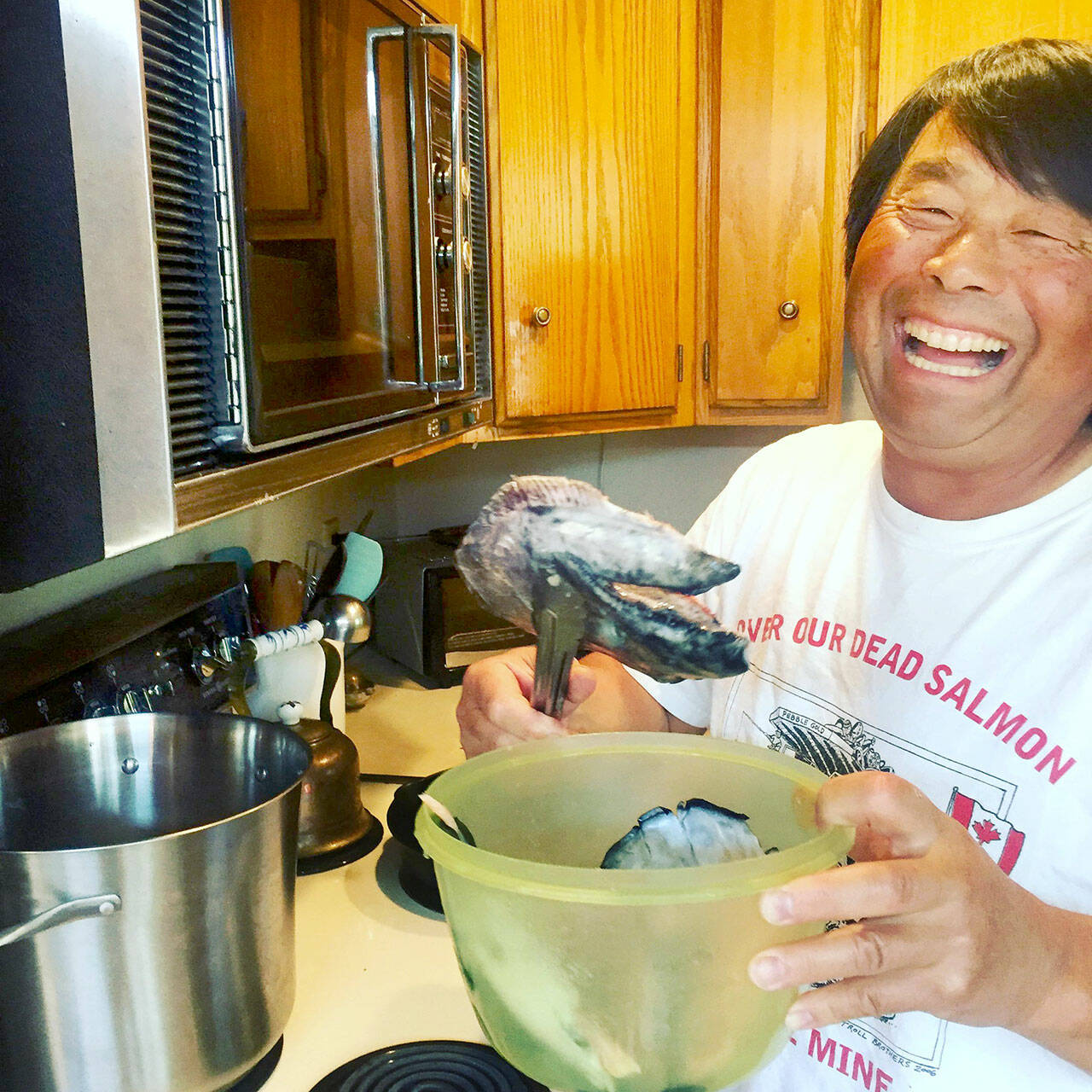
QUILCENE — Community member, advocate and Quilcene fisherman Joel Kawahara, 70, has been lost at sea.
U.S. Coast Guard crews searched more than 2,100 square miles over 18 hours and suspended their search for Kawahara on Aug. 13, according to a press release.
Kawahara had departed alone from Neah Bay on Aug. 8 and was last heard from that morning. Coast Guard watchstanders made repeated callouts, and aircraft crews flew over the vessel’s trackline but received no response.
On Aug. 12, an aircrew observed Joel’s boat, the F/V Karolee, was rigged for fishing with its lights on and life raft stowed, but they saw no signs of distress.
The Coast Guard Cutter Sea Lion intercepted the vessel on the morning of Aug. 13 and confirmed no one was aboard and all safety equipment was still present. The Karolee was taken in tow to Eureka, Calif.
Kawahara was born April 27, 1955, in Seattle, where he grew up in lower Queen Anne. As a child, he visited his grandmother, Tani Lindsay, at her Dabob Bay property in Quilcene most weekends, said Kawahara’s brother, Ken.
“My dad was an avid sport fisherman, so we were always fishing out there,” Ken said. “On the beach, we would gather clams and oysters.”
Ken and Joel also were assigned pest control around the property, Ken said. Lindsay kept a flower garden.
“It was a long, rich history that the Kawahara family had in Quilcene,” friend and commercial fisher Amy Grondin said. “The family was so loved that the community kept track of the property for them so they had it when they came back from being interned.”
Joel attended the University of Washington, where he received a physics degree.
Joel’s father Hitoshi “Hippo” Kawahara owned a tackle shop near Pioneer Square in Seattle for years. When he retired, he purchased a small boat and got his commercial fishing license to take it to Alaska in the summers, Ken said.
“Joel would always go with him, and I think that really started him on the route to commercial fishing,” he said.
Joel fished with him during his summers off school and continued after he graduated.
When Hitoshi sold his boat, Joel returned to the UW to pursue his degree in electrical engineering. He then went to work for Boeing, Ken said.
In a 2022 interview Joel gave on KPTZ Port Townsend’s “Our Working Waterfront,” he shared about his path to becoming a fisherman.
“In the space of five years, (I) decided that working for people and with people that wanted to blow up the world every day of their working lives was no way to live, so I decided to go back and become a fisherman,” Joel said in the KPTZ interview.
As a commercial fisherman, Joel fished salmon, albacore tuna and sometimes halibut. He fished in Alaska, Washington, Oregon and California.
Joel won the National Fisherman’s Highliner of the Year award in 2009.
He was a champion of the environment, longtime friend Kellie Henwood said.
“Specifically fisheries habitat, as well as the commercial fishing industry in general,” she said.
Joel was involved in a number of organizations. He was a board member of Save Our Wild Salmon Coalition, president and director of Coastal Trollers Association, he was on the salmon advisory subpanel and the habitat committee with Pacific Fisheries Management Council, and he a member of the Alaska Trollers Association.
Grondin said she and Joel often teamed up to advocate for policies which would manage habitat for people as well as for the fish.
The two traveled to Washington, D.C., and Olympia together to talk to elected officials, as well as to the Port Angeles office of former U.S. Rep. Derek Kilmer, Grondin said.
During the fishing offseason, he was still advocating for salmon, she said.
“I used to laugh that he was the head, I was the heart,” Grondin said. “He had the numbers and I told the story. Together, it came out pretty compelling.”
Being a gifted communicator, a scientist and an engineer with a deep appreciation for the ecosystems that he and many relied on made Joel effective in his advocacy work, Henwood said.
Joel was like the safety officer of the fleet, Grondin said.
“Joel was the safest person on the water, which is so ironic, why this happened to him,” Grondin said. “He was the mother hen of the fleet. He would check in on people every evening to make sure everything was fine. Every morning, he checked in with everybody.”
He was a great cook, especially when it came to seafood, Henwood said.
She met him in Alaska when she was a greenhorn deckhand working on Grondin’s boat. The two became friends and would check in with each other. They would regularly play cribbage together.
Somehow, Henwood talked Joel into allowing her to work on his boat for the summer of 2012, even though he had worked alone for many years.
Joel had a deadpan way about him, Henwood said. He could be a stinker.
“He was funny as hell,” she continued. “His personality could be really quiet at times, or it could be larger than life, with his booming, loud laugh that just made you feel so good when you were laughing with him because this, warm, warm self.”
Henwood has been reviewing her text history with Joel since learning of his loss. One text Joel sent her after seeing some of his fishing community illustrated the relationship.
“In the fishing fleet, community means somewhere or anywhere between San Diego and Yakutat,” Henwood read. “How people living hundreds of miles apart feel as close as neighbors, I don’t know, but that’s our community,”
________
Reporter Elijah Sussman can be reached by email at elijah.sussman@peninsuladailynews.com
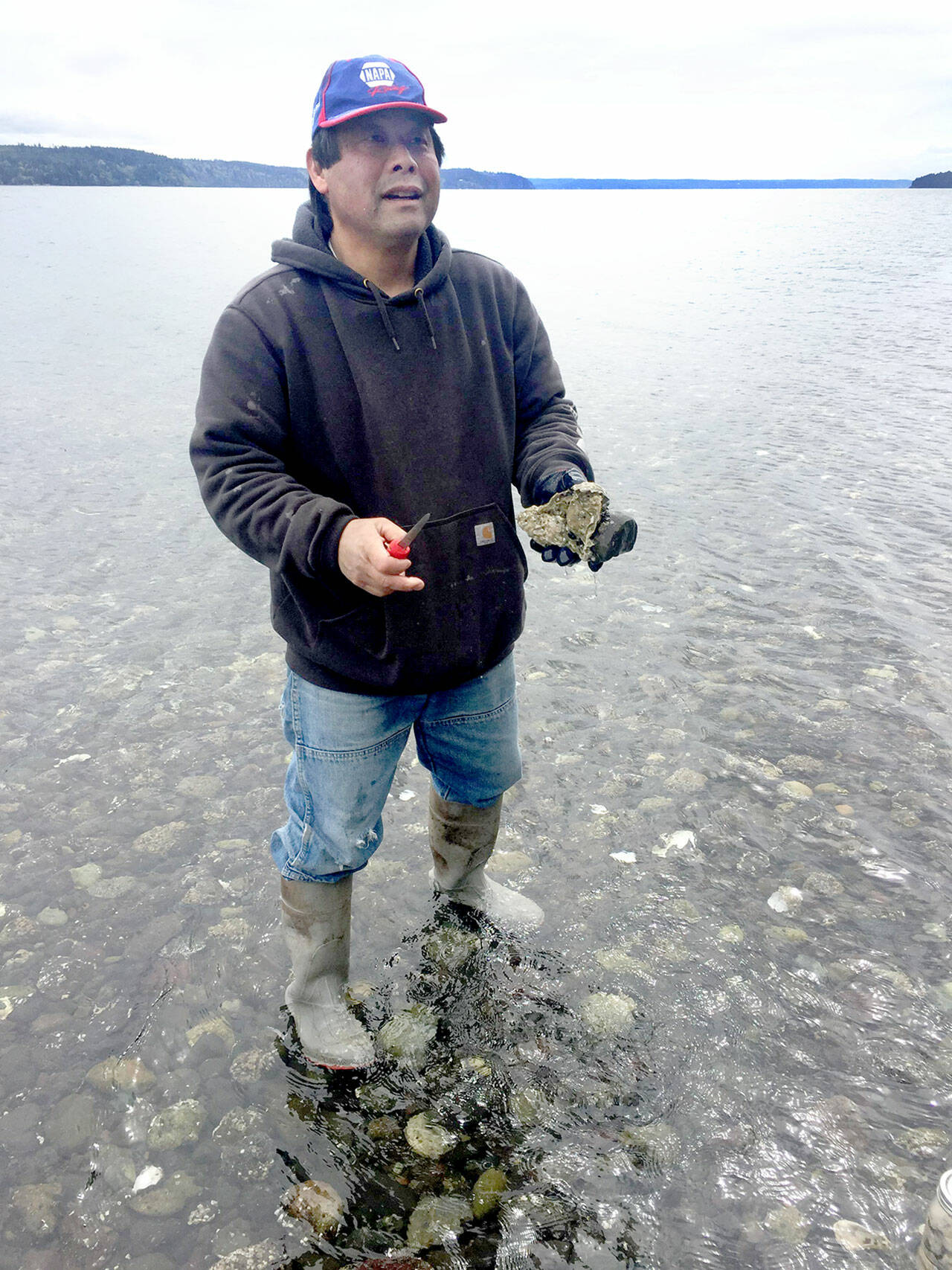
Joel Kawahara holds an oyster in Dabob Bay in 2018. (Kellie Henwood)
