
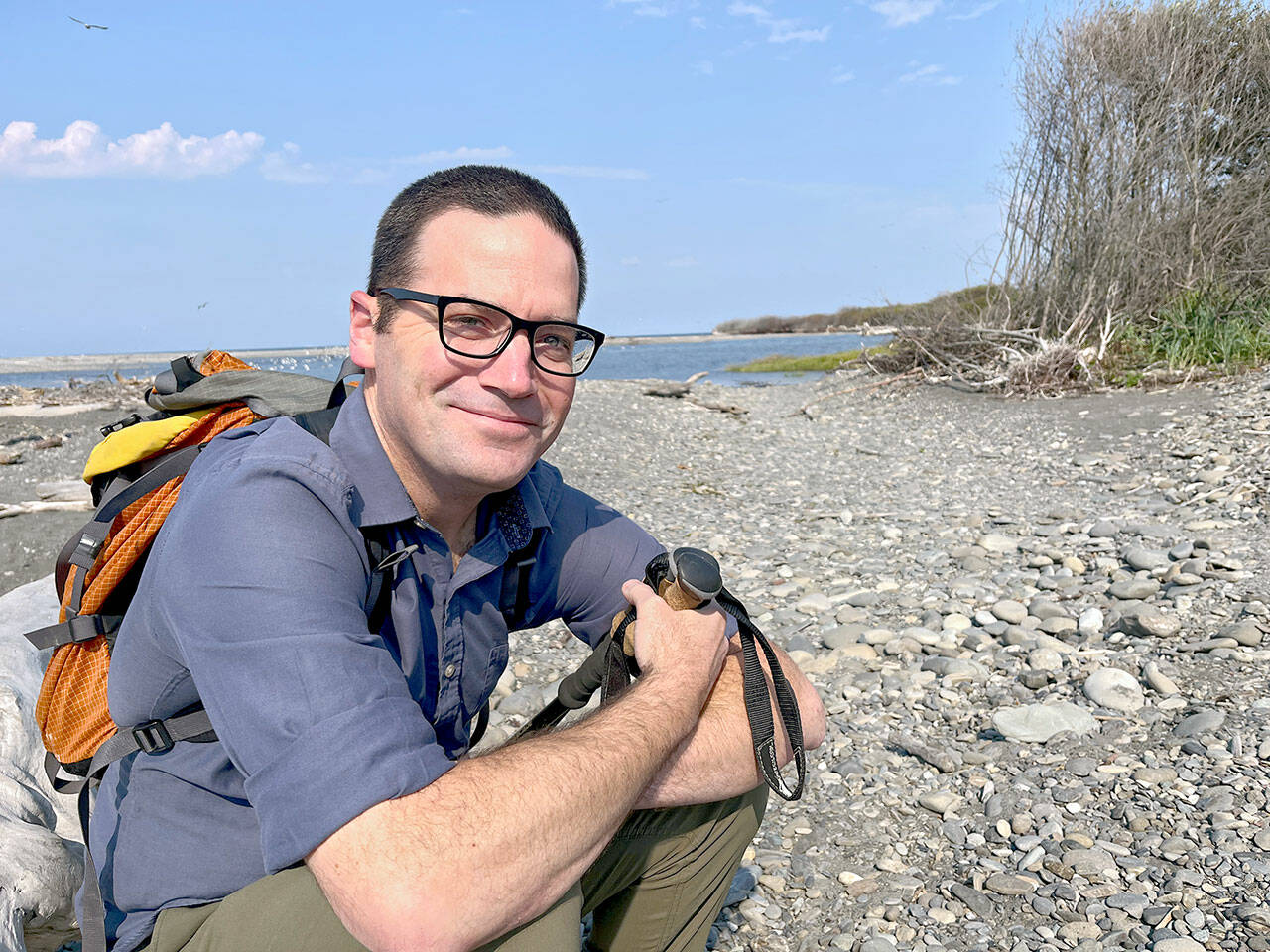
SEQUIM — In 2023, Michael Glore stood on the side of the Dungeness River, releasing salmon fry with his daughter Darcy.
As the pair watched the fish swim away, a staff member with the Dungeness River Nature Center explained the journey the salmon would go through, how they would experience hardships but still come back to the area.
That experience struck a cord with Glore, who was preparing to send Darcy off on a cultural exchange trip for a year.
“It really taught me the power of these resources and how they can inspire,” said Glore, who started working as the new executive director of the center this week. “When I was letting those fish go, it helped me let go of my daughter so she could grow and face new challenges.”
Glore was recently hired to run the center, which is a partnership between the Jamestown S’Klallam Tribe, the National Audubon Society and the Olympic Peninsula Audubon Society.
“I think the people and the facilities are amazing,” he said during an interview Friday. “I’ve met many volunteers, many board members and of course the staff, and they’re among the most passionate, mission-based people I’ve worked with.”
The mission of the Dungeness River Nature Center is to inspire understanding, respect and stewardship of the Dungeness River watershed, he said.
Glore has degrees in anthropology from the University of Alaska Fairbanks and Washington University in St. Louis, according to a press release from the center. His studies focused on the relationships between people, culture and the environment.
“Michael brings to the center strong skills in leadership, teambuilding, grant writing, program planning and management, and navigating organizational change,” Dungeness River Nature Center Board President Kathy Steichen said in the release. “He has experience building relationships with internal and external partners to develop and fund new projects that enhance resource understanding, accessibility and inclusivity.”
Glore comes to the center after 20 years working with the National Park Service. That work is what brought him, his wife Angela, and Darcy, now 18, to the Olympic Peninsula.
Glore moved to the Peninsula in 2020 to work at Olympic National Park as the interpretive operations manager, supervising all the visitor-facing facilities such as the visitor centers and the ranger stations.
“I’ve always admired the center,” Glore said. “When I first moved here with my family during the pandemic, I was able to see the construction of the new facility and the restoration projects along the river. That’s always been impressive. A lot of things in my personal and professional life attracted me to the center.”
One of those was what he described as a life-changing health situation which changed his mobility and how he views the world. Instead of looking to far-off places for nature experiences, Glore turned to the local environment and learned new ways to appreciate the natural world, he said.
“I think the center does a really great job of being an intimate, community-based center,” he said. “It’s welcoming to people of all backgrounds. I feel like it’s really welcoming and accessible.”
The center’s partnership with the Jamestown S’Klallam Tribe also attracted Glore to the executive director role, he said.
“I feel like the future of conservation is an indigenous one,” Glore said.
He stated he’s always understood the relationship tribal people have with nature, but getting to experience it during the canoe journey this summer was a powerful event. Glore also spent time in California on the Yurok Reservation this summer where he witnessed tribal youth kayak down the undammed river for the first time in generations, another powerful experience.
“Serving the Jamestown S’Klallam Tribe in some capacity is an honor and I don’t take it lightly,” he said.
Glore joins the center as it begins its Strategic Plan 2030, which will guide the center’s work in the years ahead, according to the press release.
“There’s a lot I’m still learning about the center,” Glore said. “This place is constantly growing and changing. One thing I want to be is a coach and a cheerleader of these different programs that are going on, managing growth in a sustainable way, enhancing communication among partners and program managers. I’m looking into expanding the educational programs that we offer.”
He said he’s interested in dark night skies and natural soundscapes and wants to incorporate those into the center’s programming.
For more information about the Dungeness River Nature Center, go to dungenessrivercenter.org.
________
Reporter Emily Hanson can be reached by email at emily.hanson@peninsuladailynews.com.
