
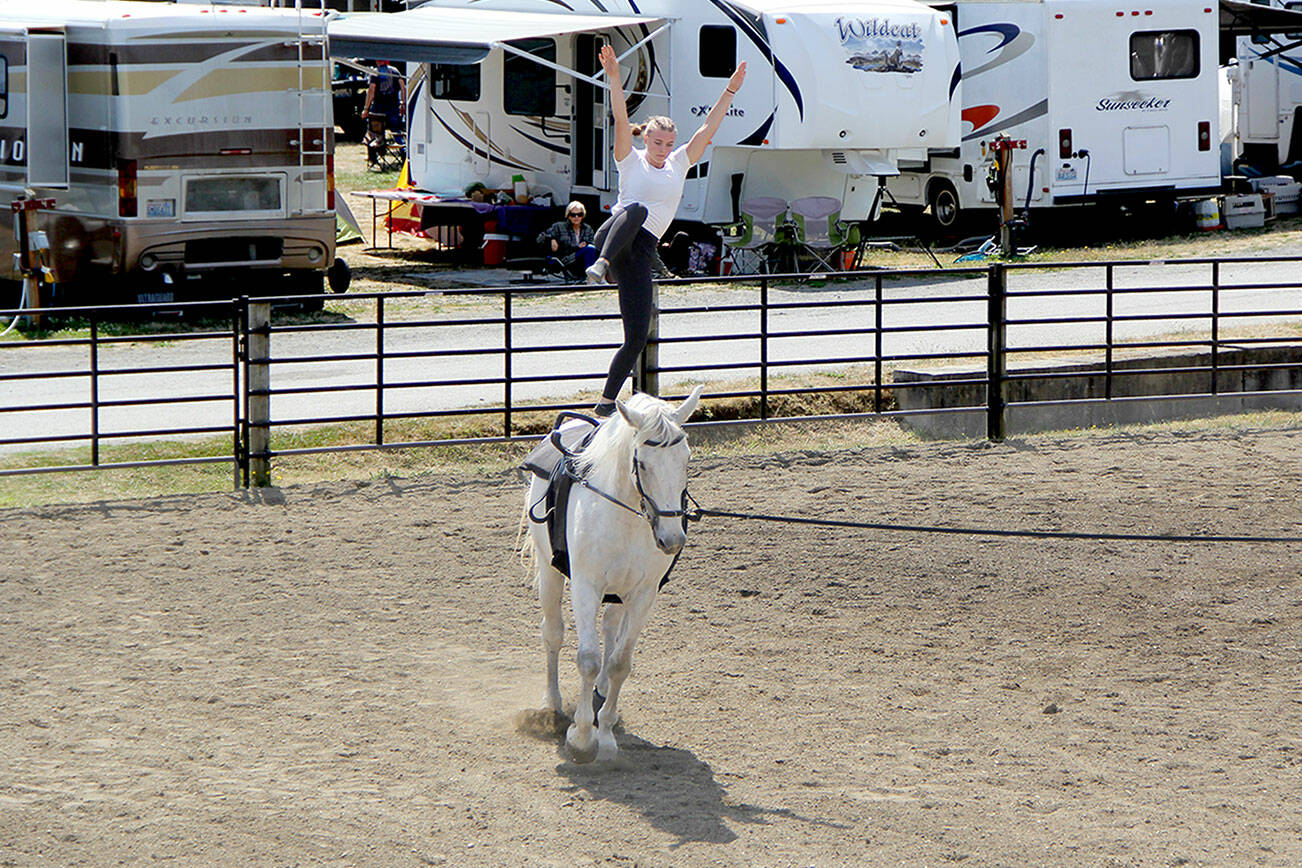
OH, TO BE young, agile and with a lithe body able to take a running leap onto the back of a moving horse to perform acrobatic moves! As I’m none of the above, all I could do was dream about the possibility while watching the Harbor View Vaulters perform earlier this month at the Jefferson County Fair.
Vaulting is a growing sport that combines dance and gymnastics on a moving horse. It’s a wonderful way to develop coordination, balance, strength and creativity while working in harmony with the horse. It was fun to see beginning to more advance vaulters — ages 9 to about 30 — show their skills atop horses Hugo, Charlie and Jake.
As vaulters performed their moves, coach Lori Robison explained over the microphone about various moves executed during competitions, explaining the rules, along with how vaulters are scored in both compulsory, or mandatory, moves, as well as freestyle moves. She said the No. 1 thing judges look for is the vaulter’s harmony with the horse.
Robison’s been the owner/coach of Harbor View Vaulters for 17 years. Based at Four Winds Riding Center in Gig Harbor, it’s an independent team open to all ages and that’s registered with Equestrian Vaulting USA. They compete in the state’s Region III. Robison’s daughter Julie was lunging Hugo for the vaulters that day.
In the Equestrian Vaulting USA organization, the horse is attached to a lunge line and controlled by a trainer (called a lunger). The horse, lunger and vaulter work as a team, with the lunger controlling the horse, the horse performing at a continuous gait (either walk, trot or canter, depending on the vaulter level). The vaulter performs a series of gymnastics and dance moves on the horse as it moves in its circle.
While equestrian vaulting may be a precursor to someone wishing to do trick riding, or perform in a circus, the sport itself focuses on a very safe, controlled environment for both horse and rider.
According to Equestrian Vaulting USA, vaulters are taught to condition their bodies with stretching and strengthening exercises and are also taught safe mounts and dismounts at all levels. Most exercises are learned on a stationary apparatus called a vaulting barrel before they are performed on the horse. Gymnastics training boosts skills.
Vaulting programs are not for only competitive teams but include recreational groups, Pony Clubs, 4-H Clubs and therapeutic vaulting programs.
For those who desire to learn vaulting, it’s best to learn with an experienced coach and horse. In other words, you don’t need to own your own horse, nor even know how to ride a horse, but it certainly helps.
Visit the Four Winds Riding Center’s Facebook page to learn more about Harbor View Vaulters, home to HEART, an approach to Equine Assisted Psychotherapy and riding lessons.
Or call Lori Robison at 253-691-0676 or email lori@fourwindsrc.com.
Or visit https://equestrianvaulting.org.
To learn more about events and clinics in Equestrian Vaulting USA Region III, visit www.avaregioniii.org.
Survey
Horseplay readers may recall I’m part of the volunteer group helping Clallam County’s Emergency Management Department to complete a large and small animal emergency disaster response plan in the event we’re hit with a widespread disastrous event such as a mega earthquake, wildfire, etc. You can help by filling out this quick survey by going to county’s website at www.clallamcountywa.gov/1336/Alerts-and-Incidents and clicking on the link Clallam County Animal Disaster Plan Survey.
This will help us gage approximately how many animals may be in need of temporary sheltering.
Thanks to all for participating!
________
Karen Griffiths’ column, Peninsula Horseplay, appears the second and fourth Saturday of each month.
If you have a horse event, clinic or seminar you would like listed, email Griffiths at kbg@olympus.net at least two weeks in advance. You can also call her at 360-460-6299.
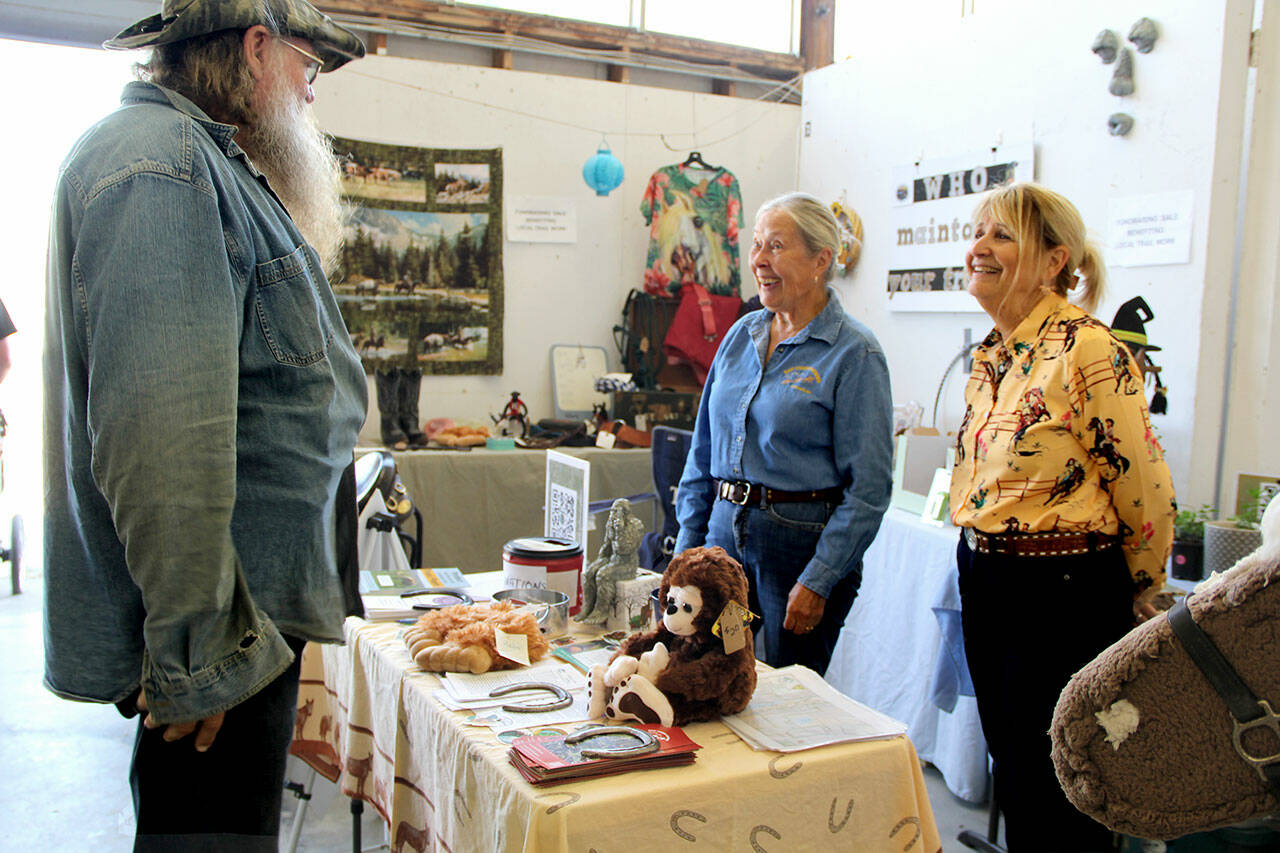
Photo by Karen Griffiths Buckhorn Range Chapter of Backcountry Horsemen held a booth to showcase all the trail building, maintenance and repair work its members perform – to the benefit of all trail users. Members Kris Lenke and Nancy Scott answer questions for fair visitor Sven Sarlentz.
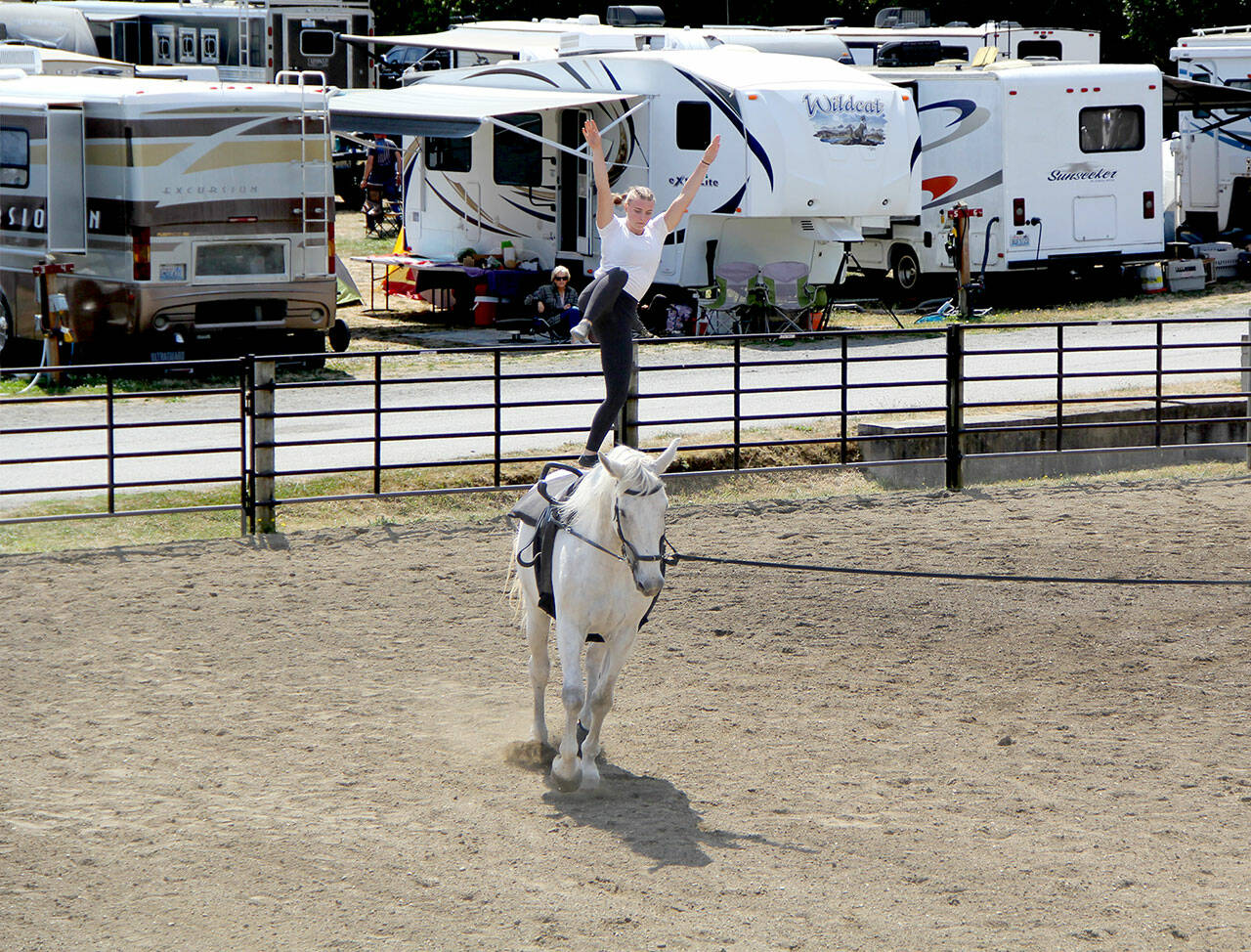
Photo by Karen Griffiths Gig Harbor based Harbor View Vaulters gave a stellar performance at the Jeffco Fair on Aug. 9. Advanced member Genna Downen showcased a series of vaulting moves on the smooth, slow cantering horse Baron Van Hugo Harbor View Vaulters Four Winds Riding Center in Gig Harbor
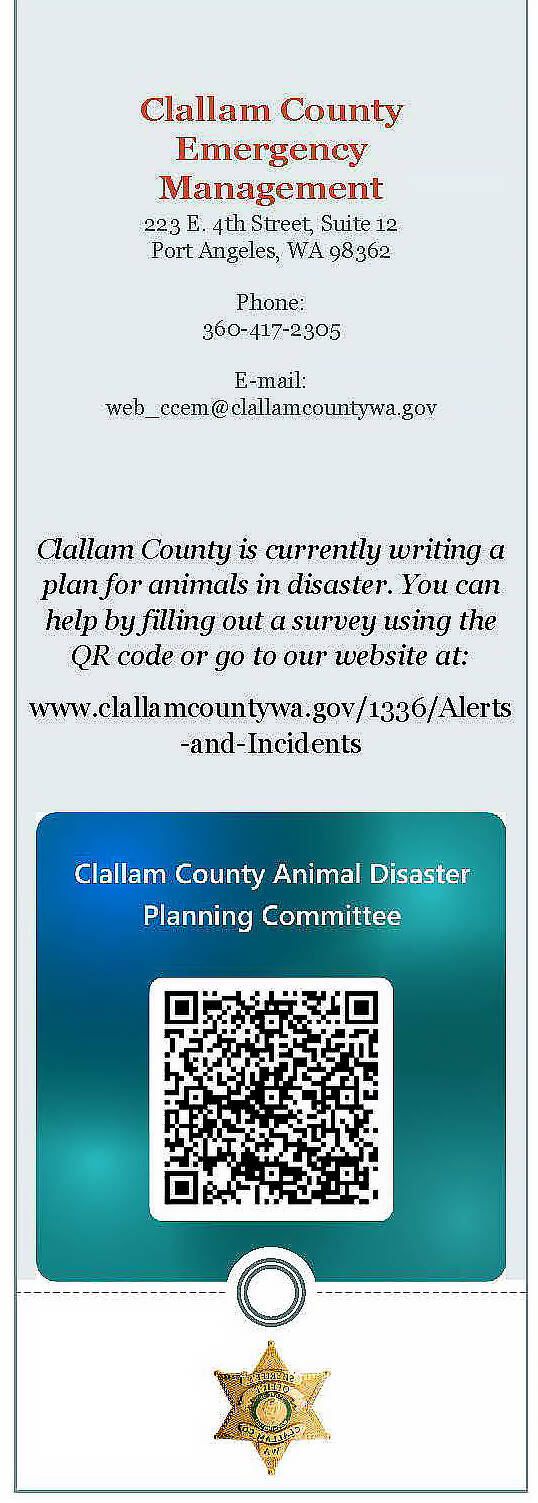
Attention all Clallam County residents! Asking both animal and non-animal owners to please complete the county’s emergency disaster animal response plan by filling out this quick survey. Simply scan the barcode or go to county’s website at: www.clallamcountywa.gov/1336/ Alerts-and-Incidents and click on Clallam County Animal Disaster Plan Survey.
