
I MAY BE a bit odd, but when I recently read an obituary, I was drawn to a 1998 movie titled “The Legend of 1900.” The plot centers on a baby boy abandoned in the first-class dining room of an ocean liner.
Local pioneer David O’Brien was born in 1844 on a steamer while en route from Ireland to the United States. These were very difficult times in Ireland and David’s mother must have believed it necessary to emigrate to the United States. The Great Famine in Ireland is documented to have been from 1845 to 1849. Things do not happen quickly. Hard times were already being felt in Ireland.
David’s father had died several months prior. His mother died at his birth. David may not have known much about his parents. On David’s death certificate, the words “no record” are repeated regarding his parents and his birth.
David grew up in New Orleans, which was one of the ports of entry for immigrants. I suspect that David was raised by family members who were emigrating with his mother.
I found records showing a 4-year-old David R. O’Brien as part of a family headed by John Donnseigh, 28. The mother was Hanora Hannah O’Brien, 39. The age difference causes me to ponder the circumstances surrounding this relationship. John Donnseigh was a carpenter and, as a young man, David worked as a carpenter.
David later moved to Texas. He operated a freight line supplying frontier forts. While in Texas, David met and married Sarah Ann Fesler in 1872. Sarah Ann was from Pennsylvania. Sarah joined David on many of his dangerous trips. On one journey, they learned of a stage coach massacre a few miles ahead of them. Maybe it was time to get a new job and live elsewhere. In 1884, David and Sarah adopted their son, Ernest.
David and Sarah were drawn by advertisements for a new life in old Port Crescent. Their journey to a new life started in 1888 and they got as far as Seattle, where they lived for three years. In Seattle, David worked as a carpenter and was the secretary for the Western Central Labor Union of Seattle. David’s Socialist views may have developed in Seattle.
It appears that several things drew David and Sarah to Port Angeles. There was the utopian society experiment of the Puget Sound Cooperative Colony. There was the labor union connections with the colony founders, and there was the opening of the townsite reserve through the non-violent “jumping the reserve” that started on July 4, 1890.
David and Sarah arrived in Port Angeles in July 1891, and “squatted” on two lots at Sixth and B streets. David built a home, worked as a carpenter and established a wood yard business.
C. D. Ulmer, who operated a local newspaper, lived nearby to David. Passing one day, Ulmer remarked, “This would be a good time to get a block of land for a school site.” They were going to work together to pick out some land, but Ulmer was too busy. So David took on the task alone.
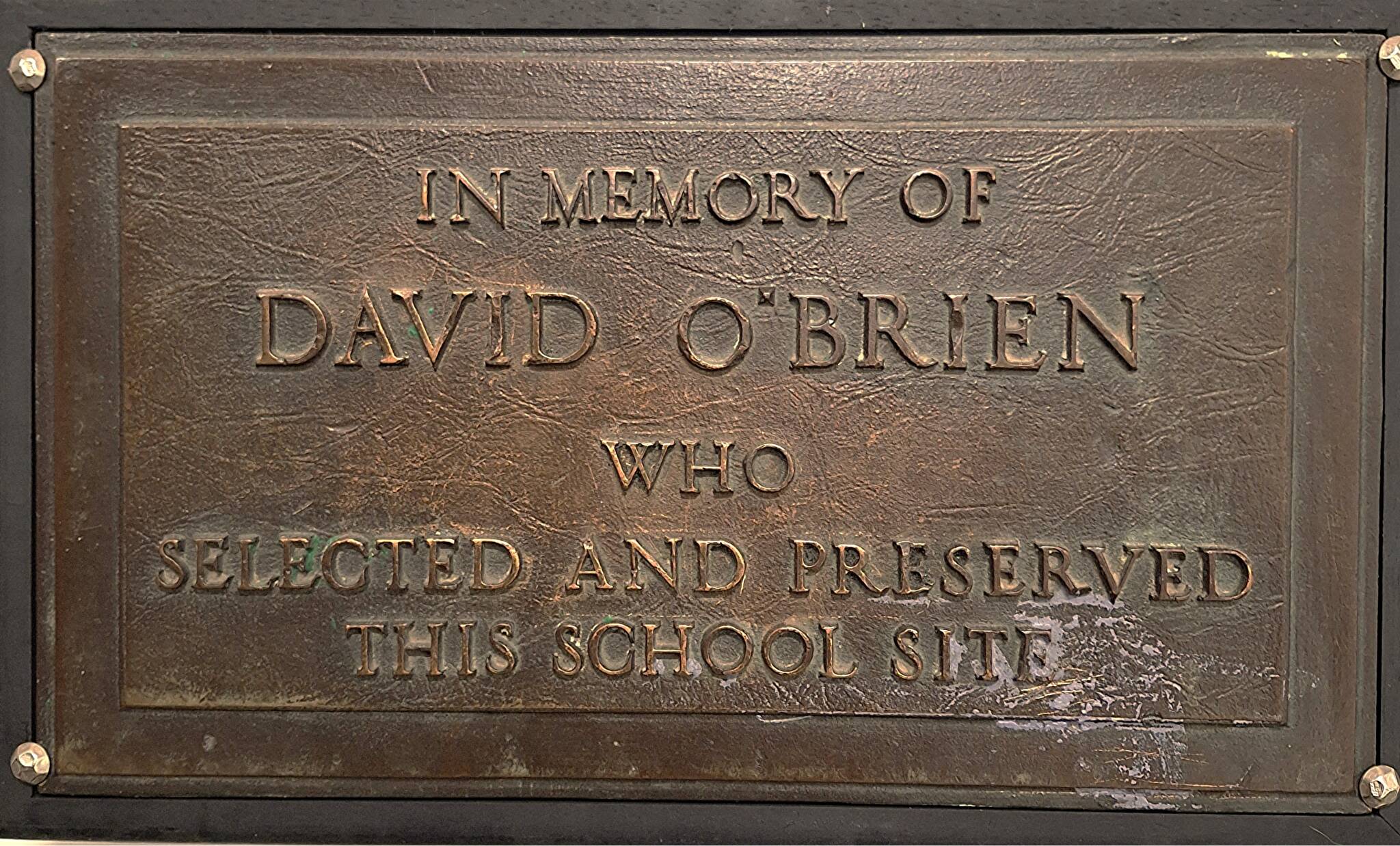
David was credited with saving the block where the old Lincoln School now stands. David staked out the four corners of the block and posted signs stating the government had donated those lots for school purposes. The statement was not true, but David’s bluff worked and the land was not settled. David’s supporters, including G. M. Lauridsen and W. D. Stivers, guarded the site until a one-room schoolhouse was built. David, of course, helped build the original schoolhouse with lumber cut from the trees on the block.
David was a passionate believer in free education.
On the two lots David squatted on, he used one for his home and the other as his wood lot. There was an anecdotal story that David had a green wagon with a motto emblazoned on its side with the words, “wood your wife can split.”
David was a fixture in local politics. He repeatedly ran for public office. Sometimes he won. David did serve on the city council and also served for a time as street superintendent. David ran for mayor in 1914 under the Socialist Party. He ran against Horace White. White received 306 votes and O’Brien received 208 votes.
David was noted by friends as a champion of lost causes, yet he always stood out in front for what he believed to be right.
In 1911, Henry Weeks, the editor of the Tribune-Times, responded to a debate challenge from David. Within his tirade, he wrote, “But let me give you and your fellows a piece of advice, don’t depend upon the social organism to make good for individual failures. There is no system that will make the chronic work hater like work, nor give rights without duties. Achievement is now, and always will be, under any system, the measure for a man’s rights.”
It seems that socialism was not popular in Port Angeles.
Regardless of Weeks’ views, David and Sarah were always there to help out their neighbors. In 1917, David wrote, “The willingness to assist those who are unfortunate, as has been the proven in the last few days by the generous response to a needy call, convinces me that there is something nobler and grander than the struggle for wealth and that is, the service we render our fellow man. It is not the great deeds done, so much as the little acts of kindness each day that bring joy and happiness to all and makes life really worth living. Port Angeles certainly has warm hearted people as has been proven to me many times, and especially so in the past few days in my humble attempt to render assistance to an unfortunate neighbor. How beautiful it is to know that there are willing, helping hands, ready to render loving service, giving the star of hope to the discouraged and despairing ones and relieving them in their sorrow.”
On December 19, 1919, the home of a widow, Mrs. Bengston, was destroyed by fire. A group of 22 men gathered on Sunday, Dec. 21, and built her a new home in one day. David was part of that group.
Starting in 1923, Sarah suffered through three paralyzing strokes. Sarah Ann O’Brien died on Dec. 15, 1924, from a cerebral hemorrhage.
In 1918, David began to show signs of senility. His condition worsened until his death on Oct. 17, 1928.
David and Sarah are interred together at Ocean View Cemetery. Their grave marker is simple and unassuming. Helping others does not need glorious monuments.
________
John McNutt is a descendant of Clallam County pioneers and treasurer of the North Olympic History Center Board of Directors. He can be reached at woodrowsilly@gmail.com.
McNutt’s Clallam history column appears the first Saturday of every month.
